
Produced by Drew Wesely
All music by Drew Wesely, Camilo Ángeles, Laura Cocks, Lester St. Louis, and Carlo Costa
Recorded by Andres Abenante at Jaybird Studios February 2024
Mixed by Drew Wesely
Mastered by Guiseppe Ielasi
Liner Notes by Nate Wooley
Camilo Ángeles – flute
Laura Cocks – flute
Lester St. Louis – cello
Drew Wesely – bowed / prepared guitar
Carlo Costa – percussion
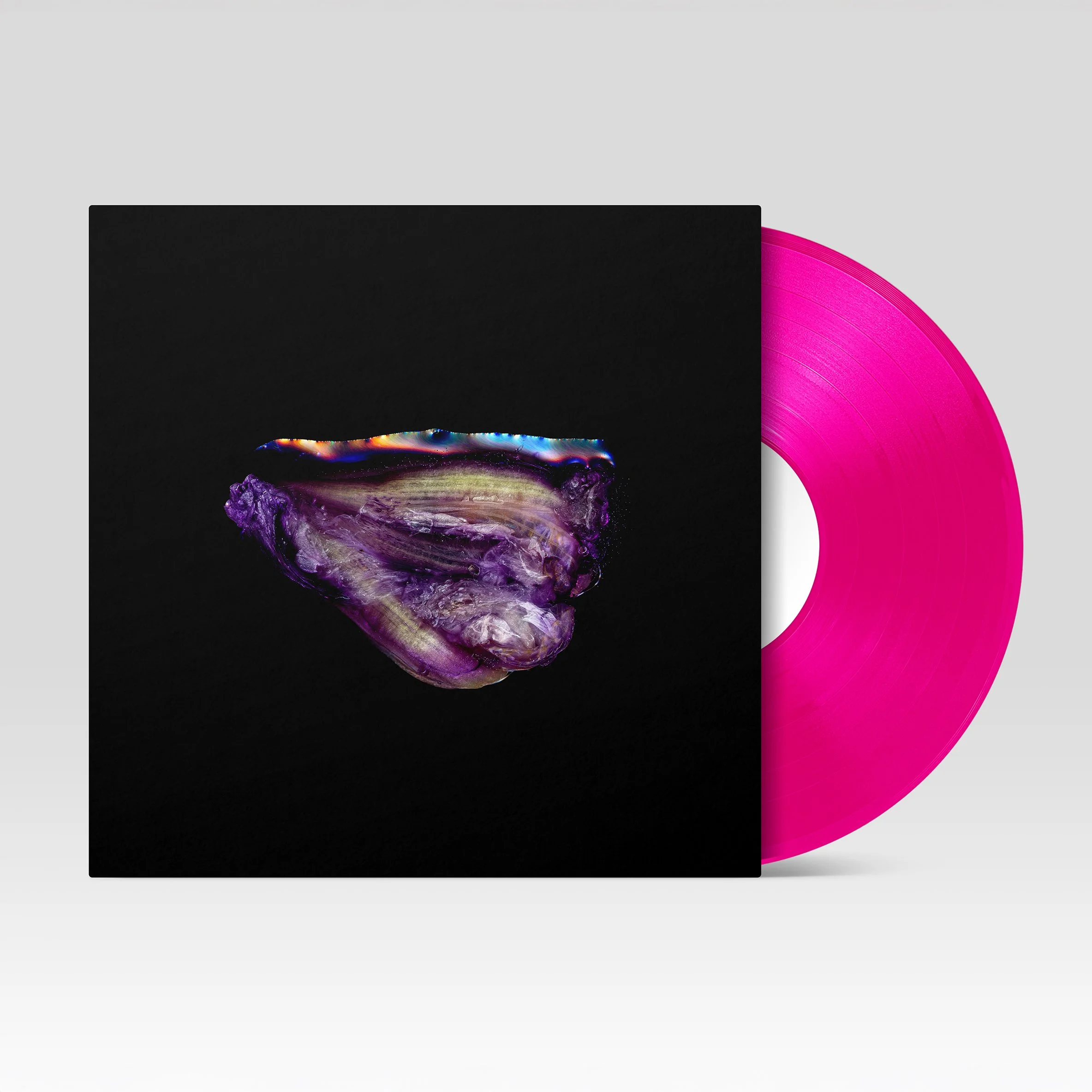
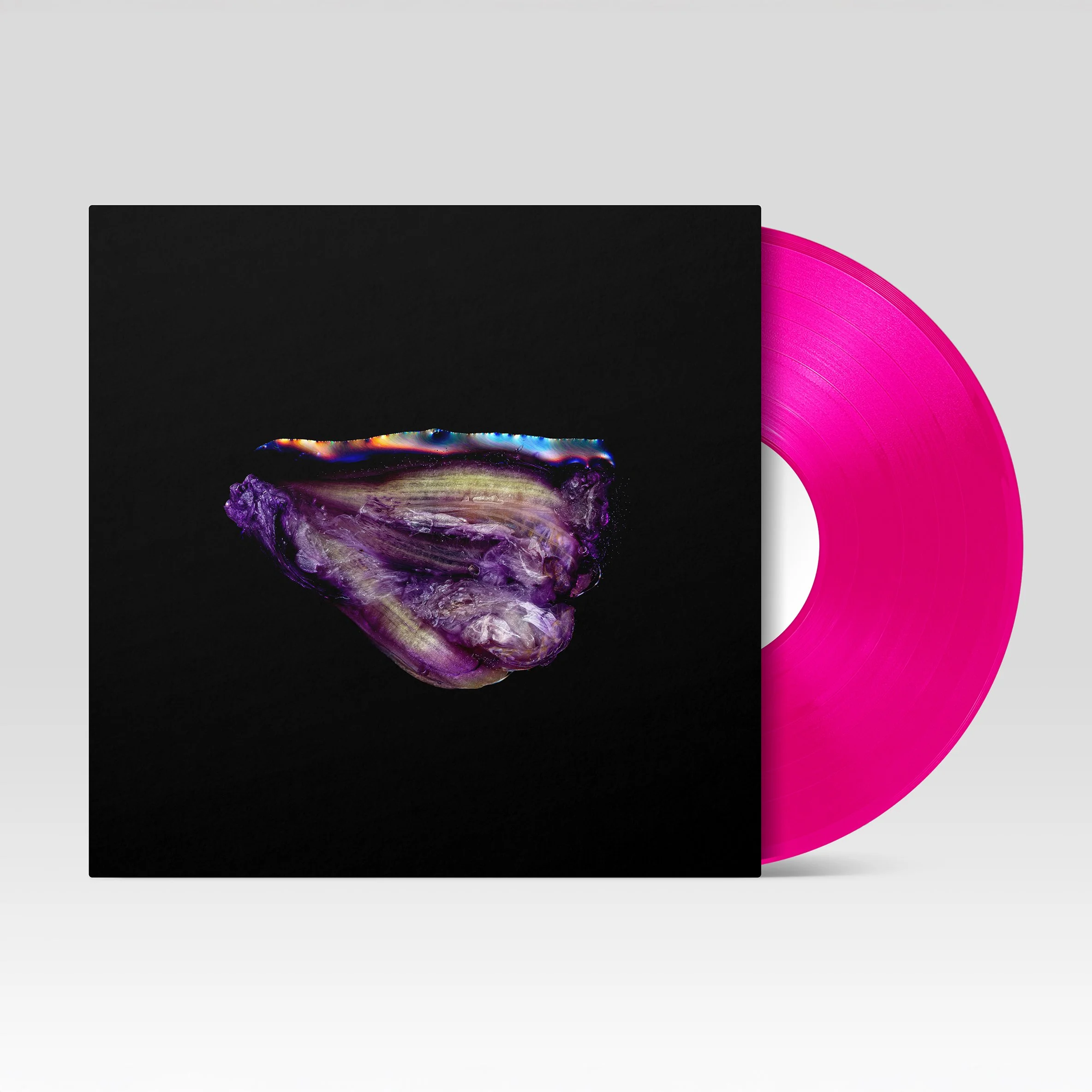
Cover photography by Matthias Urban
Wesely / Cocks / Ángeles / St. Louis / Costa
A Fine Chance for Permanence
Complexity: music made up of shifting facets and difficult ideas requires shifting and difficult descriptions.
Each generation of improvisors gathers itself—naturally and consistently—in the act of rewriting the poetry of spontaneous music. The need to group words/sounds/images in an order that feels honest to lived experience is innate in all creative humans, and the history of musicians collectively building new musical syntax ranges from jazz freeing itself from the song form in the 1960s to the reliance on silence during the reductionist or lowercase movements of the last twenty years.
With easier access to recordings, writings, and discussion, the question of how today’s cohort can keep themselves from splintering off into thousands of unconnected vocabularies is a real one. The promise of a globally connected community has proven, so far, to be moving toward alienation. It is heartening to see, then, that today’s improvisers seem to be using the digital glut of information to create a shared music of différance, or a “both/and” kind of thinking that defies a concretized ideological performance practice), rather than choosing to disperse into multiple, evolutionarily barricaded languages.
A Fine Chance for Permanence may become a historical document of this new movement’s embrace of the internet age and its possibilities. The music here spreads itself out like a data set rather than unfolding into a linear narrative. It builds upon the creation and dissolution of multiple relationships within an ever-shifting sense of time rather than a virtuosic reproduction of hanging images within a set of aesthetic rules. Asymmetrical pulses replace rhythms; frequencies and sighs supplant pitches; floating timbres are substituted for strict counterpoint. But while the improvisations on this record dance around the aurorae of music’s building blocks, they are not afraid to grasp at the concrete—the historical as the expected—as a source material for new music. A Fine Chance is a conscious deconstruction of what we mean when we mean music; it is a single cycle of music differánce frozen in time.
Ideas: historical, philosophical, aesthetic, merely opinions in air until something concrete is given.
So, let’s get to the concrete. The opening track, “A” is a singular article and a singularly good place to start from an alphabetic point of view. The track’s predominant voice is that of a trio: Drew Wesely on guitar, Lester St. Louis on cello, and percussionist Carlo Costa. All three are gaining quick prominence in the Brooklyn music scene and have been working together for years under the name Hypersurface.
The music of “A” is a nod to another generation’s poetry, written and codified in the early 2000s: lowercase or reductionism. The comfort that comes from the trio’s regular gigging has produced the willingness necessary to let things unfold slowly. The ensemble deals in softness and revels in the discomfort of protracted silences before carefully planting its next small gesture. This is music based in the history of nmperign and Berlin, quakebasket and AMM. But, as if to politely hand me evidence for my above theory, the group steers itself clear of the strictures of that era’s ideologies and dogmas; it desires not only soft, timbral events within an expanding ecru of silence, but aims to build a lifeworld where each vocalization, extended technique, and decisive silence feels present and in the service of a newly birthed ecosystem.
Distinctions: guesses and assumptions that arise from my experience with the players and their relationship to historical models.
To define this music based only of my perception of its models is to play a zero-sum game. As stated above, grasping the beauty of this music involves “both/and,” so it is imperative to try and explain the wobbly reasoning that allow the music on this record to be described both historically and ahistorically. This involves the interplay of subjective essences rather than the reproduction of objective ideas. A lot of ambiguity there, so allow me a short digression, and hopefully a good example.
Two canonical compositions for solo piano were written in hopes of recreating the sound of moving water: Les jeux d’eaux à la Villa d’Este (The Fountains of the Villa d’Este) by Franz Liszt and Maurice Ravel’s simply titled Jeux d’eau (literally “water games,” but probably referring also to the sound of a fountain). In Liszt’s piece, the pianist performs a series of arpeggiations that travel with a consistent density between peaks and troughs spaced at regular intervals. The result is the idealized sign of rushing water—a cartoon, an amateur drawing of a river with wavy lines to connote the flow of the stream.
Ravel’s piece, on the other hand, breaks its pitches up into cascades that fall and rise in odd bunches within the phrase, rapidly traveling to an apex or taking their time to reach a nadir. While both pieces use the same keyboard, the same equal-tempered twelve-note octave, and the same basic sense of what music “should be,” Ravel’s Jeux feels more vibrant and closer to the reality of water’s sound, because it understands and references the asymmetrical “swing” of nature and bends the parameters of Western concert music in order to place the essential reality of its subject over the programmatic rearrangement of existing structures.
The small sounds and silence of “A” enact Ravel’s attempt at reality, but in terms of a radically different musical style. Taken objectively, the music exists in a world of timbral improvisation we know from the minimalist and electro-acoustic genres of the early part of this century. But the musicians aren’t offering the mere representation or two-dimensional recreation of components and techniques, such as Liszt attempts in Les jeux d’eaux à la Villa d’Este. “A,” instead, tries to express a new version of how reductionism essentially works when it works best. Daring in its smallness, a threshold music that makes the listener lean in, it makes the music of an earlier era tell a story of now.
Beginnings: the “dawning” of a generation’s desire to find the essence of their vibrant individuality.
This mixing of old language with new syntax continues through the whole record and is only heightened by the addition of flutists Laura Cocks and Camilo Angeles. Although both are active in the same musical circles as the trio, this record is, in essence, a first meeting of the full quintet. It is new and possibly risky, but the close listener will be immediately assured Cocks and Angeles are stepping toward the same dawn as the trio.
The flutes drive the group into the game play of another recognizable improvisational era—European free music of the 1960s—in the record’s fourth piece, “per.” The duo’s opening interplay emerges from the language of Topography of the Lungs and Spontaneous Music Ensemble, working in atomistic groupings of energetic sound bursts and sustained blocs of atonal phrases. As the trio does when driving the softness of “A,” Cocks and Angeles use the strength of their opening improvisation to urge the group to actively color just out of the lines of history, directing the velocity of their historical model consciously where others hoping to cop this style would lay down a sheet of Evan-Parker-sound on autopilot. The density is different, the speed, the intensity, but the desire to repurpose language for new poetry is the same.
Although I chose to split up my introduction of the group into the established trio and the new wind players, it must be said that this is not a “trio-with-guests” recording. Nor is it a quintet. Nor five musicians in a studio together. It is an idea that is larger in its connotations for the shape of music to come. It’s a working-group, a lab, an open-ended reading society. The feeling here is that these five could, at any time, be joined by others and the ecosystem would simply stretch in order to organically accommodate the new voice into a seamless and egoless whole. This submergence of the individual, virtuosic voice is what makes this new direction so interesting on a social level, and I think it is what makes this record so easy to return to again and again.
Scratchings: an attempt to articulate my own early understanding of a music that is new and old, dense and sparse, elusive and folk-like.
This record does contain virtuosity; the players can bend their individual instruments to their will and each have the gifts of a sensitive grasp on the history of this music alongside a healthy aversion to adhering to its rules. This is a rare thing, a virtuosity of restraint and wary respect. But, more importantly, A Fine Chance for Permanence is among the first markings of a new generation’s way of improvising. Unlike previous musicians who were still saddled with the dialectic of jazz and chance operations, this group seems to have freed themselves from the constraints of the grid of the song form or the conceptual difficulties of indeterminacy, allowing them to address how to best occupy open space and each other. This music exists both within a tradition and within the negative space that isn’t that tradition. With some care and attention, the listener will come to appreciate the radical nature of a new attempt to conceive of music, improvisation, and group dynamics.
– Nate Wooley